

Setting Up a Company in Poland: A Practical Guide for Foreign Entrepreneurs
Poland has become one of Central Europe's most attractive places to do business: a large market, a central location and a steady flow of foreign founders setting up here every year. If you are thinking about starting a company in Poland, the process is very doable — but it rewards good preparation. This guide explains the main decisions and steps, so you know what is ahead before you begin.
First, choose the right legal form. The two most common options for newcomers are a sole proprietorship (jednoosobowa działalność gospodarcza, often shortened to JDG) and a limited liability company (spółka z o.o.). A sole proprietorship is simpler and cheaper to run and suits freelancers and small operations, but you are personally responsible for the obligations of the business. A spółka z o.o. separates your personal assets from the company, looks more credible to larger partners and is often the better fit for foreign founders, scaling teams or anyone who wants limited liability. The right choice depends on your plans, your risk appetite and how you intend to be taxed.
Registration and the registers. A sole proprietorship is registered through CEIDG (the central register of business activity), while a spółka z o.o. is entered into the KRS (the National Court Register), today most often online. Setting up a company also means deciding on its name, registered address, share capital, scope of activity (PKD codes) and the people who will represent it. Getting these details right at the start avoids corrections and delays later.
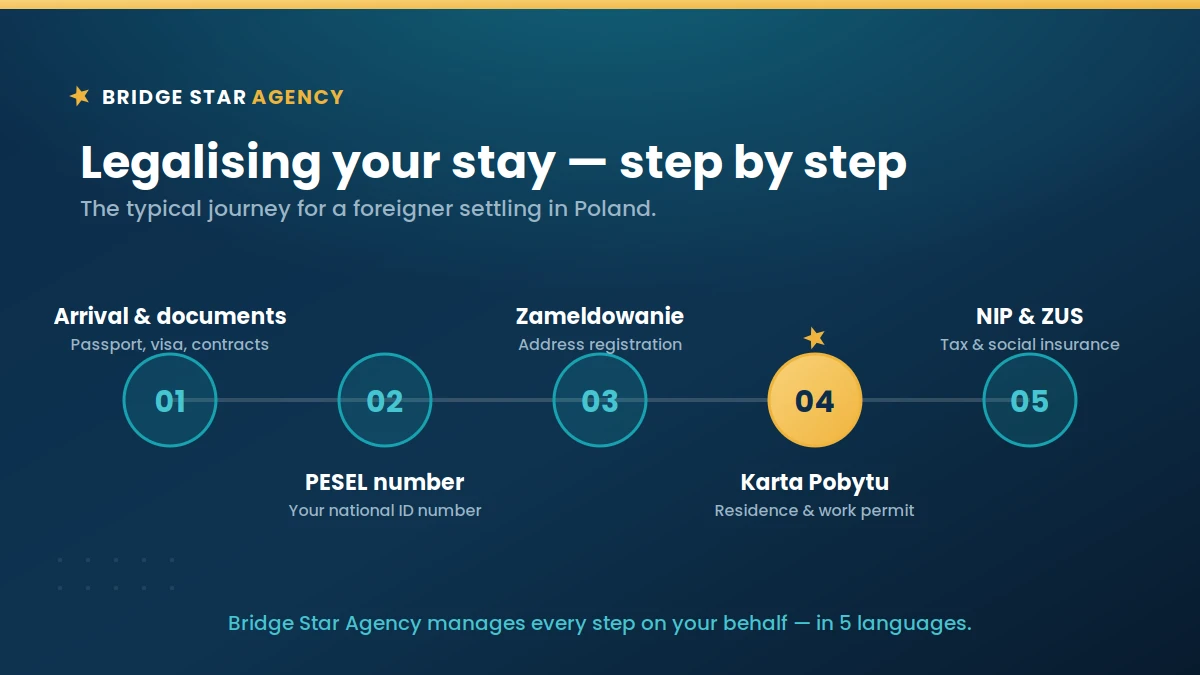
Tax numbers and VAT. Your business will operate under a NIP (tax identification number). Depending on your activity and turnover, you may also need to register for VAT (podatek VAT). Whether VAT registration is mandatory or optional, and which VAT rate applies, depends on what you sell and to whom — this is an area where early, correct advice pays off, especially for cross-border sales.
ZUS and ongoing obligations. Running a business in Poland comes with ongoing duties: social and health contributions through ZUS, regular bookkeeping, and periodic tax filings. The exact contributions and reliefs can differ — for example, there are start-up reliefs for new entrepreneurs in some situations. The key point is that a company is not "set and forget": it needs steady, accurate monthly handling to stay compliant.
The part most founders underestimate: accounting. Many people focus on the excitement of launching and underestimate the monthly reality — invoices, declarations, deadlines and reporting, much of it in Polish. This is exactly where a reliable accounting partner changes everything. With your bookkeeping, tax declarations and reporting handled professionally, you stay compliant, avoid penalties and free your time for the actual business.
How Bridge Star Agency helps. We support foreign entrepreneurs end to end: registering and establishing new companies from scratch, monthly and annual accounting, preparing and submitting tax declarations, producing financial reports and analytics, and managing all accounting processes with official institutions. On the legal side, we provide consulting for companies, prepare and review contracts, give guidance on business disputes and support you in procedures with state institutions — all with support in five languages.
Thinking about starting up in Poland? Tell us about your plans and we'll map out the right structure and the steps to get there. 📩 contact@bridgestarconsulting.pl · bridgestarconsulting.pl